
Early in editors’ careers, we learn to keep an eye out for what’s called “alphabet soup.”
It most often pops up in headlines as a space-saving measure, but we find it cooked into stories at times, too. We get alphabet soup when too many abbreviations (more on this term later) are used.
An example of an alphabet soup headline: SEC probes improper use of AI by FAs and RIAs
So, this month, let’s review when including abbreviations is helpful—and when it’s not.
When an entity that’s commonly referred to with an abbreviated name is a main player in a story, it makes sense to introduce readers to the abbreviated name, usually in parentheses after the first reference. An example is using FTTinstead of repeating the full Department of Film, Television, and Theatre name throughout a story. This helps readers know what FTT stands for as they encounter it throughout a written piece.
Including these abbreviations after the first reference of an entity’s name, though, is not helpful for readers when the abbreviation is never referred to again, or is used only once or twice. In these cases, you’re asking your readers to hold on to unnecessary information; readers assume if an abbreviation is introduced they’ll need to remember what it is as they read. This adds to the mental load we as communicators are asking readers to take on, and if that gets too heavy or too confusing, readers will just walk away.
Another downside of too many abbreviations is that their use veers quickly into jargon territory. In the example headline above, SEC and AI are fairly well-known, but how many readers will know FAs or RIAs?
Bottom line: Only introduce an abbreviation to readers if it’s going to show up repeatedly in the content. Otherwise we risk confusing readers—and we don’t want them to look like the above meme when they’re trying to make sense of our content.
⇒ For a deep dive into how readers react to acronyms, check out this research article.
A note about the term abbreviation
Technically speaking, what many people refer to as an abbreviation can be divided into two buckets: an acronym or an initialism. For the purposes of this email, I chose to use abbreviation as an umbrella term. If you want to read more about the distinction, Dictionary.com offers a primer.
Meta descriptions matter
Note: For more information on this monthly feature from Marketing Strategist Staci Stickovich, see the November Editor’s Note.
Don’t let bots determine how your page appears in search results. That’s what’s happening if you’re ignoring meta descriptions. These short summaries appear under your page title in search results. They don’t directly impact rankings, but they do influence clicks—and more clicks can signal to search engines that your content is valuable. Meta descriptions can also shape how content is pulled into AI-generated responses.
- Use a unique description specific to each page.
- Keep it clear and concise (50–160 characters).
- Focus on what the reader will find or learn.
April goal: Review the meta descriptions on your key pages to ensure they’re clear, specific, and easy to understand in search results.
Pop quiz
I’d like to do another poll this month. There are no wrong answers! By participating, you’ll be entered into a drawing for a prize. I’ll share the results in next month’s email.
Do you know when to use who and when to use whom?
This poll features a bonus question: Do you think the difference still matters?
February pop quiz winner
Congrats to the winner of the February pop quiz: Claire Kucela, senior advisor, Upward Bound!
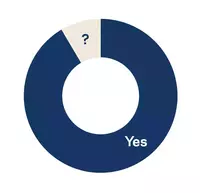
For the February quiz, I opted to do a poll: Do you know the difference between weary and wary?
Of the respondents, the answer is an overwhelming yes! Nearly 92 percent affirmed that they do know the difference. The remaining 8 percent chose “I think so, but I always look it up” (a great answer). No one admitted to not knowing.
Confusing weary and wary is one of the more common mistakes I see online, and it’s easy to understand why: The two adjectives look so similar to each other in writing, and in many dialects, they can even be pronounced the same.
In professional communications, though, it’s important to choose the right word. Here’s the difference:
weary = tired, exhausted
wary = careful, cautious, alert
Merriam-Webster offers a convenient way to remember the difference: To keep them separate, remember that wary sounds like other caution-related words like aware and beware.
What we’re reading
These are stories that we found to be interesting, fun, or thought-provoking. The views are not necessarily endorsed. Want to share a story you found? Feel free to send it to me.
The New Pressure Points in Modern Marketing Teams
Dragonfly Editorial
2026 Grammar Day Poetry Contest Winners
ACES: The Society for Editing
Academics Need to Wake Up on AI
Popular By Design (a Substack from an ND associate professor)
Latest style guide updates
There are no updates this month. Have a suggestion for a new or updated entry? Please feel free to send it to me at bcollin8@nd.edu!
Have a grammar or style question?
Editor’s Note is a monthly email for anyone who communicates on the University’s behalf.
Did someone forward you this email and you’d like to get on the mailing list? Please fill out this form.